
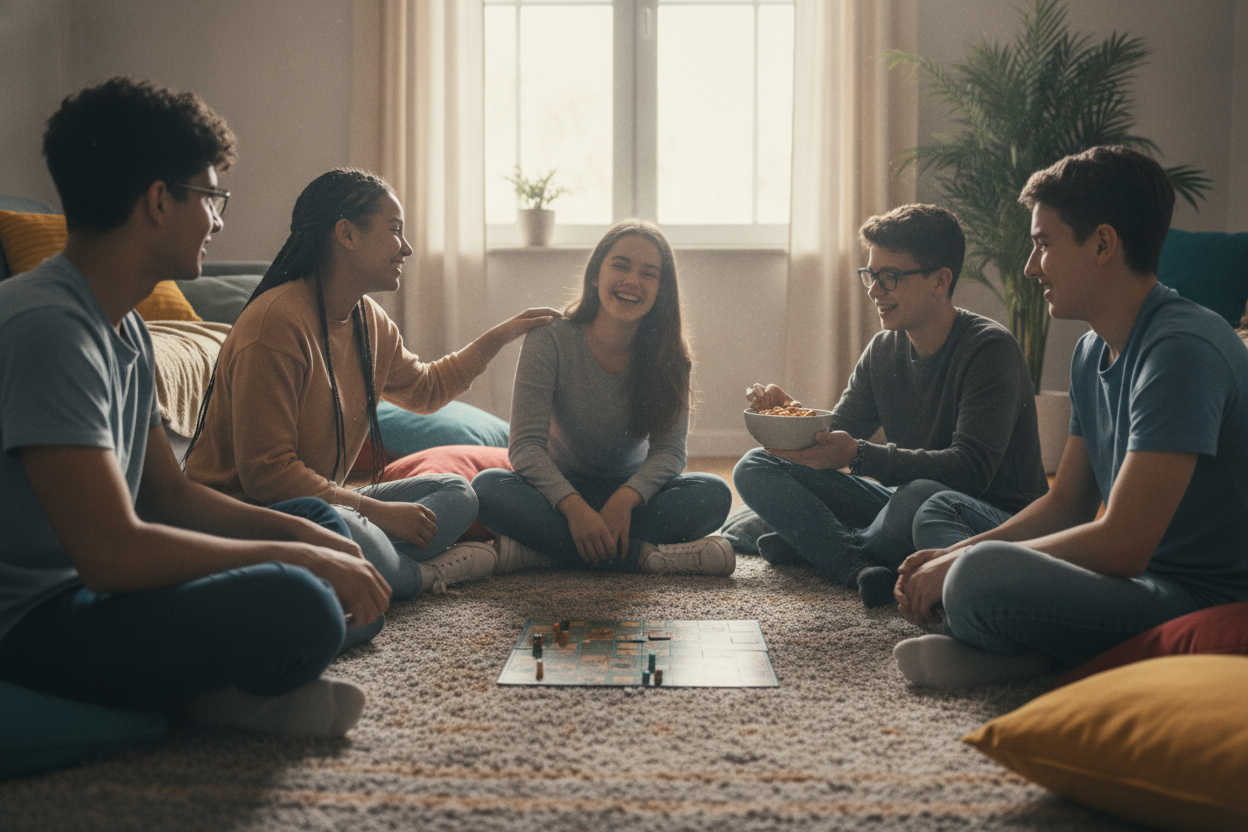
Peer groups can either protect children or intensify harm, depending on the culture that forms within them. A safer peer group is one where children feel seen, included, and able to speak up without fear. Adults can encourage this by helping kids notice how words, jokes, and group decisions affect others.
Simple routines can shape healthier friendships. Inviting someone new to join a game, checking whether a classmate is being left out, or speaking privately when conflict begins can all reduce the chance of social cruelty. Children do not need perfect friendships to build a strong group; they need repeated examples of respect and empathy.
Adults can also praise specific positive actions. Recognizing a child for including someone, standing up for a peer, or asking for help sends a clear message about what matters. That kind of feedback is often more effective than broad reminders to “be nice,” because it shows what kindness looks like in practice.
Safer peer groups do not happen by accident. They grow through attention, modeling, and consistent expectations. When children learn that belonging should never depend on humiliation or fear, they begin to build relationships that are healthier and more resilient over time.
Leave a Reply